A business idea can solve a genuine customer problem, introduce a better service, or create a new revenue opportunity. However, turning that idea into a successful mobile app requires more than hiring developers and building a set of features. Enterprise app development firms need to understand their customers, validate demand, plan the product experience, choose suitable technology, and prepare for the challenges that come with launching a digital product.
The same principle applies to startups, established businesses, and enterprises building apps to improve internal operations or introduce new services. Turning a business idea into a market-ready mobile app means transforming a validated business opportunity into a usable, reliable, secure, and commercially viable product. The process begins with understanding the problem, continues through design and development, and extends into launch, customer feedback, and ongoing improvement. So, let’s explore each step one by one.
Why Does a Good Business Idea Need More Than App Development?
An idea may sound promising during initial discussions, but its commercial value depends on whether people actually need the solution and are willing to use it. Businesses that move directly into development without validating these assumptions risk spending money on features that customers do not value.
A market-ready app must connect three important elements: customer needs, business objectives, and technical feasibility. Customer needs determine what the product should solve. Business objectives establish how the app will generate value, whether through revenue, operational efficiency, customer retention, or improved service delivery. Technical feasibility determines how the solution can be built, maintained, and scaled.
How Do You Validate a Mobile App Idea Before Development?
Validating these factors before development helps businesses identify product risks, prioritize the right features, and make more informed investment decisions. Once the idea shows promising demand, the next step is to define an MVP that addresses the most important customer needs.
| Validation area | What to evaluate | How to validate |
| Customer problem | Is the problem genuine and frequent? | Interview potential users |
| Market demand | Are people looking for a solution? | Surveys, search trends, landing-page tests |
| Competition | What do existing apps do well or poorly? | Review competitor features and customer feedback |
| Unique value | Why would users choose your app? | Test your value proposition with target users |
| Revenue potential | Will customers or businesses pay? | Test pricing and willingness to pay |
| Technical feasibility | Can the app be built within the available budget? | Consult a development team |
| Product usability | Can users complete key tasks easily? | Test a prototype with potential users |
| Success metrics | How will you measure early traction? | Define activation, retention, and conversion targets |
How Do You Turn Your App Concept Into a Clear Business Plan?
A clear plan connects product decisions with customer expectations, revenue opportunities, and measurable outcomes.
Define Your Value Proposition and Target Audience
Your value proposition should explain what the app does, who it serves, and why customers should choose it over existing alternatives. It needs to be specific enough to guide product development and marketing.
This decision affects the interface, onboarding process, content, and features included in the first release.
For business applications, also identify the people who will use the app, approve its purchase, and manage it after implementation.
Choose a Business and Revenue Model
Your revenue model influences how the app is designed, promoted, and maintained. Common options include subscriptions, one-time purchases, commissions, in-app purchases, advertising, and business-to-business licensing.
The right model depends on the value you provide and how frequently customers need it. A productivity app might use a subscription model for recurring access, while a marketplace may earn commissions from completed transactions. An enterprise mobile web app development could generate revenue through licensing, implementation, and ongoing support.
Set Clear Goals and Success Metrics
Define the outcomes the app should deliver before development begins. These might include reducing manual work, increasing repeat purchases, improving customer retention, shortening service delivery times, or generating recurring revenue.
Translate these objectives into measurable indicators. For example, a booking app could track completed bookings, abandoned bookings, repeat usage, and the time required to make a reservation.
Which Features Should You Include in Your First Mobile App Version?
Here are some features that must be integrated into mobile apps.
Prioritize Features That Solve the Core Customer Problem
Separate features into three groups: essential functionality, useful enhancements, and future possibilities. Essential features are the ones users need to complete the app’s primary task. UI/UX design services perform enhancements that improve convenience, while future features can wait until the product has been tested.
For an appointment-booking app, essential functionality might include service listings, available time slots, booking confirmation, and appointment management.
Build a Minimum Viable Product to Test Your Idea
A minimum viable product (MVP) is an initial version that includes enough functionality to solve the main user problem and test important business assumptions. It is not simply an incomplete app with fewer screens.
A well-planned MVP for a mobile app should have a clear purpose, dependable core workflows, and enough quality to let real users evaluate the experience. For example, a marketplace MVP might begin with seller listings, product discovery, payments, and order management before introducing advanced recommendations or automated loyalty programmes.
Plan Future Features Around User Feedback
After launch, review customer feedback alongside actual usage data. A feature that receives many requests may deserve attention, but behavioural data can reveal problems customers do not always explain directly.
If users repeatedly abandon a checkout process, the solution might be a simpler payment flow rather than an entirely new feature. If customers struggle to find products, better navigation or filtering may deliver more value than adding more inventory categories.
How Do You Choose the Right Technology and Mobile App Development Partner?
Technology decisions influence development cost, app performance, integration capabilities, maintenance, and future scalability.
Select Between Native and Cross-Platform Development
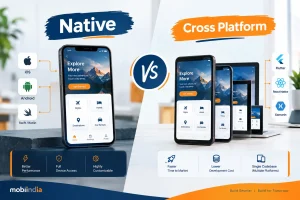
Native app development services use platform-specific technologies to build applications for iOS and Android. It can be appropriate when an app requires deep operating-system integration, specialized device capabilities, or platform-specific performance optimization.
| Consideration | Native development | Cross-platform development |
| Codebase | Separate platform-specific implementations | Shared code for much of the app |
| Platform integration | Direct access to platform capabilities | Depends on framework support and integrations |
| Development effort | May require separate teams or expertise | Can reduce duplicated implementation |
| Best fit | Specialized platform needs or complex integrations | Many business apps targeting iOS and Android |
Plan the Backend, APIs, Integrations, and Security
The mobile interface is only one part of the application. Many apps depend on backend services to manage user accounts, business logic, databases, transactions, notifications, and integrations with existing systems.
A scalable architecture should support expected growth without adding unnecessary complexity to the first release. The aim is to build a dependable foundation that meets current requirements and can be extended as the business evolves.
Evaluate a Mobile App Development Company’s Experience
The mobile app development services you choose will influence technical decisions, delivery quality, and the ability to maintain the app after launch. Look beyond portfolio screenshots and assess whether the team understands your business objectives.
Ask about relevant project experience, discovery and planning, design practices, testing methods, security, communication, and post-launch support. Request examples of how the team handled technical challenges or adapted a project after receiving user feedback.
Map the Customer Journey Before Designing Screens
Start by mapping the steps users need to complete their main tasks. For a shopping app, this might include discovering a product, reviewing its details, adding it to a cart, making payment, and tracking delivery.
Wireframes help teams organize these steps before investing in a mobile app with detailed visual design. They also expose unnecessary screens, confusing navigation, and missing actions while changes are still relatively inexpensive.
Create an Intuitive and Consistent Interface
The interface should help users understand what to do next without requiring lengthy instructions. Clear labels, readable text, consistent buttons, visible feedback, and predictable navigation make important tasks easier to complete.
Design should also reflect the context in which customers use the app. A delivery app may need clear status updates and quick access to order information, while a financial app may require especially clear transaction details and confirmation steps.
Test Prototypes Before Full Development
Give potential users an opportunity to interact with a clickable prototype and complete realistic tasks. Observe where they hesitate, misunderstand a label, or struggle to find the next step.
Use this feedback to refine the workflow before the development team implements it. Early usability testing cannot eliminate every problem, but it can identify avoidable design issues before they become more expensive to fix.
How Do You Develop and Test a Market-Ready Mobile App?
The app must also perform reliably, protect user information, and support the situations customers will encounter in everyday use.
Follow an Agile Development and Feedback Process
An iterative development approach breaks the project into manageable stages. The team builds and reviews specific features, tests working versions, and adjusts priorities as the project progresses.
Regular demonstrations give stakeholders opportunities to review progress and resolve questions before they affect later stages.
Agile development does not remove the need for planning. It creates a structured way to deliver the product incrementally, identify issues early, and respond to changing requirements without losing sight of the business objectives.
Test Performance, Security, Compatibility, and Usability
Testing should cover more than whether individual buttons work. A market-ready application needs to handle realistic user journeys, unexpected inputs, network interruptions, different device configurations, and errors from connected services.
Functional testing verifies that features behave as expected. Compatibility testing checks how the app works across supported operating systems, screen sizes, and devices. Performance testing helps identify slow loading, excessive resource usage, and problems under heavier demand.
Prepare the App for Real-World Use
Before launch, make sure the business is ready to operate and support the application. Set up crash reporting, analytics, error monitoring, backup procedures, and a process for handling customer issues.
Review privacy disclosures, app permissions, data collection, and applicable platform requirements. If the app handles sensitive information or regulated activities, additional legal, security, and compliance reviews may be necessary.
Prepare customer support workflows, incident escalation procedures, and a plan for releasing fixes. A market-ready app should not only work during a demonstration; it should be manageable when real users begin depending on it.
Prepare for App Store and Google Play Submission
Before submitting the app, prepare accurate store descriptions, relevant screenshots, app icons, feature explanations, and other required assets. The listing should clearly communicate what the app does and who benefits.
Review the current submission requirements of the relevant platforms, including privacy disclosures, permissions, account-related requirements, and any applicable payment or content rules. Test the final build and ensure the store listing matches the functionality users will receive.
Allow time for submission reviews and potential corrections.
Build a Go-to-Market Strategy Before Launch
Marketing should begin before the app becomes publicly available. A landing page, email waitlist, product demonstrations, educational content, social media campaigns, and partnerships can help introduce the concept to potential users.
Choose channels based on audience behaviour rather than trying to promote the app everywhere. A business productivity app may benefit from industry partnerships, targeted professional content, and direct outreach. A consumer shopping app may depend more on search visibility, creator partnerships, referrals, and customer promotions.
Track Adoption, Retention, and Conversion After Launch
Downloads show that people have installed the app, but they do not establish whether the app is delivering value. Track what users do after installation.
Useful metrics include:
- Activation: The percentage of users who complete an important first action.
- Engagement: How frequently users return and interact with key features.
- Retention: How many users continue using the app over a defined period.
- Conversion: The percentage who complete a desired action, such as purchasing a product or booking a service.
- Customer acquisition cost: The marketing and sales cost associated with acquiring a customer.
Crash rate and performance: Indicators of technical reliability and user experience.
Conclusion:
Turning a business idea into a market-ready mobile app requires a clear understanding of the problem, a realistic business plan, thoughtful product design, and a reliable development process. Each stage contributes to the outcome, from validating demand and prioritizing an MVP to selecting the right technology, testing thoroughly, and preparing for launch.
The most effective approach is to start with customer needs rather than a long list of features. Validate the concept, define measurable goals, and build the smallest complete solution that can deliver meaningful value. Use real feedback to improve the product and guide future investments.
Frequently Asked Questions
1. What are the steps to turn a business idea into a mobile app?
To turn a business idea into a mobile app, validate the problem, research competitors, define the target audience, choose a business model, and prioritize essential features. Next, design the user experience, select the right technology, develop an MVP, test its functionality and security, and prepare for launch. After release, use customer feedback and analytics to guide improvements.
2. How much does it cost to turn a business idea into a mobile app?
Mobile app development costs depend on feature complexity, platform selection, UI/UX design, integrations, security requirements, and ongoing maintenance. A basic MVP generally costs less than a feature-rich enterprise application. Businesses should define their requirements and obtain a project-specific estimate before finalizing the budget.
3. How long does it take to build a market-ready mobile app?
A relatively simple mobile app may take a few months to develop, while complex applications with custom integrations, advanced functionality, or enterprise requirements can take considerably longer. Idea validation, prototyping, testing, app store approval, and launch preparation should also be included in the project timeline.
4. What is the best way to validate a mobile app idea before development?
The best approach is to confirm that the target audience has a real problem your app can solve. Interview potential users, research competing solutions, test demand through a landing page or prototype, and assess willingness to pay. These findings help businesses prioritize features and avoid investing in functionality that customers may not need.
5. Should a business build an MVP or a complete mobile app first?
An MVP is often the better starting point when a business needs to validate demand, test assumptions, or understand user behaviour before making a larger investment. It includes the essential features required to solve the primary customer problem. A full-featured app may be more suitable when requirements are already validated, or the product needs extensive functionality from launch.
6. How do I choose the right mobile app development company for my business idea?
Choose a mobile app development company based on its relevant portfolio, technical expertise, discovery process, development methodology, security practices, communication, and post-launch support. Ask how the team will validate requirements, estimate costs, manage changes, and measure project success.
7. Should I choose native or cross-platform development for my mobile app?
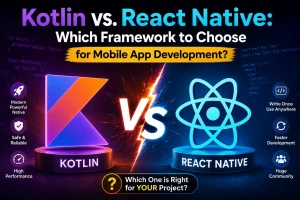
Native development is suitable when an app requires specialized iOS or Android capabilities, platform-specific optimization, or intensive device integration. Cross-platform development using frameworks such as Flutter or React Native can help businesses deliver apps on both platforms while sharing much of the codebase. The right choice depends on performance requirements, budget, features, and maintenance plans.
8. How can businesses make a mobile app successful after launch?
Businesses can improve app performance after launch by tracking user activation, engagement, retention, conversion rates, and technical reliability. Collect customer feedback, fix issues affecting important workflows, maintain security, and prioritize updates based on usage data.