Business mobile application development has become an adoptive strategy in the growing mobile economy of 2024 to improve efficiency, customer experience, and ease of doing business. Right from simplifying manual tasks to efficiently programming invasions. Companies such as mobile applications for Salesforce or mobile applications for intelligent elements are deploying enterprise mobile app development to create specific answers to their specific business needs.
Furthermore, this has increased the growth of the mobile business applications strategic market, which is estimated to grow by 13.4% per year. Recent studies show that more than 80% of all businesses are directing resources toward enterprise mobile app development, underlining the significance of a solid mobile application development plan.
Choosing the best mobile app development Company in Noida or any other area is essential for businesses looking to grow. Moreover, aligning your development with particular business goals is crucial, regardless of whether you’re using hybrid mobile app development or iOS-specific services from an iPhone app development company. Furthermore, companies can now easily create scalable apps with cross-platform compatibility that satisfy the demands. There are various customer bases thanks to the rise of mobile app development frameworks like React Native and Flutter.
Enterprise Mobile App Development is a concept that covers the procedure of generating mobile applications aimed at enhancing organizational processes. Fostering growth in large organizations. Like many others, these applications focus on improving customer satisfaction, employee cooperation, and work performance. Furthermore, organizations use them for both internal and external purposes, and they often integrate multiple systems such as CRM, ERP, and analytics platforms.
What is Enterprise mobile application Development?
Enterprise mobile app development is the process of developing applications especially for companies to enhance internal procedures, customer engagement, or productivity. Furthermore, it differs from consumer mobile applications in that its main objective is to assist processes and solve corporate issues. Moreover, businesses hoping to maintain their competitiveness in 2024 must adopt a mobile-first strategy. This sector keeps growing, whether it’s for Salesforce mobile app development, business process automation, or facilitating application scalability.
Some Categories of Mobile Applications for Enterprises

CRM Applications:
CRM applications provide sales teams access to real-time data, which facilitates improved client interactions and decision decisions. By making it easier to access client information, these applications increase customer happiness and provide more effective service. For instance, greater consumer insights are made possible by connecting CRM software. Furthermore, with platforms like Salesforce, which also automates operations and minimizes human labor.
Employee Productivity:
These programs enable organizations to automate routine tasks, determine effectiveness, and supply tools for efficient collaboration and cooperation. Moreover, recommended employee productivity tools include those that generate reports and track tasks and chores. Furthermore, which ensures that a business stays on track and its workers focus on core jobs. For those companies that are in the process of boosting their employees’ participation and improving their performance, they are essential.
BI Applications
The Big idea behind BI applications is to leverage data analysis to give managers and corporate executives useful information to act on. Furthermore, such applications focus on the power transformation of pure data into appealing and articulated reports. May shed light on market trends, consumer behavior, and, in fact, the success rate of sales for realizing data-driven decisions. In specific, organizations utilize BI to monitor in real-time key business indicators.
ERP Applications:
ERP applications combine key corporate operations from several divisions under a single platform, including supply chain, finance, and human resources. Better resource management, seamless operations, and enterprise-wide data visibility are all ensured by this. Businesses that need a centralized system to efficiently monitor and manage daily operations rely heavily on ERP systems.
Hybrid Mobile Applications
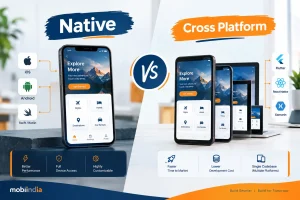
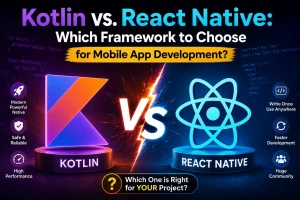
Hybrid mobile applications allow companies to use the same software on both iOS and Android smartphones since they provide cross-platform capabilities. Utilizing frameworks like React Native or Flutter, hybrid applications integrate the benefits of web technology with native app features, cutting down on development time and expense while expanding their user base.
Top Advantages of Developing Enterprise Mobile Apps

Increased Productivity
Employees can concentrate on key company responsibilities by automating chores and optimizing operations.
Enhanced Customer Engagement:
By providing individualized experiences, mobile applications raise customer satisfaction levels.
Cost-Efficiency
By automating repetitive operations, a well-designed mobile app lowers operating expense.
Business Intelligence
Enterprises can make smarter, data-driven choices with the aid of integrated business intelligence software.
Application Scalability
Scalable mobile solutions enable companies to expand without requiring major adjustments to their infrastructure.
Important Things to Think About Before Creating a Mobile Enterprise App
Businesses must consider several important considerations before beginning the creation of corporate mobile apps to guarantee the application’s success and sustainability. The following are the most important considerations for the mobile app development roadmap
User Experience (UX):
The total experience and user interface of a mobile app determines its quality. Enterprise applications need to be easy to use. To ensure uptake and ongoing usage, the app must be simple for users and employees to utilize. Interfaces that are difficult to use or unclear might cause users to use them less, which lowers productivity. In business settings, well-designed UX can boost productivity by 50% and raise user satisfaction by 40%.
Security:
Any company’s mobile app development process must prioritize security in light of the growing cyber threats. Strong security features like encryption, biometric identification, and frequent security audits are essential since workplace applications often handle sensitive company data. Prioritizing cybersecurity is essential since, according to statistics from 2024, 60% of organizations suffered a data breach because of using insecure mobile applications.
Platform Compatibility:
It is crucial to guarantee cross-platform operation. Employees use iOS and Android devices; therefore, the software should function flawlessly across all platforms without compromising speed. Frameworks for developing hybrid mobile apps, such as React Native or Xamarin, allow developers to create applications that function seamlessly across several operating platforms. Businesses will witness a 35% increase in mobile traffic from a variety of devices in 2024 as mobile use continues to rise, underscoring the need for wide compatibility.
Scalability:
To support company expansion, enterprise software has to be scalable. The possibilities of the app should grow with your business. The application should be able to manage higher workloads without compromising speed, whether this is due to additional users, more functionality, or intricate integrations. Scalable infrastructure helps to future-proof your company by ensuring that your software stays responsive and effective.
Compliance:
Companies in the government, healthcare, and financial sectors must adhere to industry rules, both morally and legally. By ensuring software complies with GDPR or HIPAA regulations, they protect user data and avoid heavy penalties. Compliance with regulatory requirements is crucial, as experts estimate that non-compliance could cause data breaches costing businesses over $5 billion worldwide in 2024.
Crucial Components of a Business Mobile Application
To satisfy corporate demands, an enterprise mobile app has to include a few essential functions in addition to the previously listed ones. These components guarantee that the application offers consumers value while preserving security and functionality:
User Authentication:
Private corporate data is safeguarded by secure login methods like two-factor authentication (2FA). Applications that handle private information or financial transactions should pay particular attention to this. Implementing robust user authentication lowers the danger of illegal access by 70%, according to 2024 cybersecurity research.
Push Notifications:
Real-time updates help consumers communicate and be more productive by alerting them to significant changes or reminders. Sales teams, for example, can be notified when there are adjustments to client accounts or new prospects.
Real-Time Data Sync:
Companies with mobile or remote staff must make sure data is current and available on all devices. Offline users can still access the most recent information thanks to real-time data synchronization. This increases operational efficiency by up to 45% by guaranteeing that everyone gets timely and accurate data.
Offline Access:
Offline access becomes essential for corporate programs that need to be accessible in locations with erratic internet availability. Employees in distant areas in the field must keep using the app uninterrupted. Data should be locally stored by the app and synced as soon as an internet connection is available.
Advanced Analytics:
The app’s built-in analytics capabilities provide insightful information on user behavior, app performance, and corporate operations. Businesses can improve productivity and overall strategy by making data-driven choices based on user activity analysis. Mobile analytics could experience a 30% increase in decision-making time by 2024.
It can make sure that their applications not only satisfy present needs but also continue to be flexible enough to accommodate future developments by considering these variables early in the development process.
Different Stages in the Development of Enterprise Mobile Apps
The process of creating a business mobile application is methodical and meticulous. To guarantee that the finished product satisfies user expectations and company goals, each step is essential. Taking a closer look at these seven crucial stages:

Idea Generation and Research
The first step is Idea Generation and Research, where the company determines the main issue that the app will attempt to address. To do this, information on the target market, industry standards, and rival solutions must be gathered. Here, establishing precise objectives and figuring out how the app will benefit consumers is essential.
Conceptualization:
The next stage after settling on an idea is to envision the features and capabilities of the app. Companies need to concentrate on the features that will set the app apart and provide value. You must determine the main user flows, choose integrations like Salesforce mobile app development or IoT technologies, and ensure the app enables scalability as it grows.
UI/UX Design:
Mobile applications need a well-designed user interface. During this stage, you create wireframes, prototypes, and the overall appearance and feel of the app. Users must be able to use the app with ease thanks to a simple user interface. Enterprise applications must strike a balance between usability and functionality since stakeholders and workers will depend on them for vital business functions.
Development Phase
The app starts to take form during the Development phase. To provide the essential functionalities, developers here use mobile app development frameworks such as Flutter Flow, React Native, or Xamarin. The nature of the application, whether hybrid or native and the importance of cross-platform capabilities often influence the framework selection. Developers connect back-end services like enterprise resource planning (ERP) systems, write the code, and integrate APIs.
Testing
The fifth step in the process is testing, which ensures that the application functions flawlessly on all hardware and operating systems. Performance, security, usability, and functional testing are all included in this. Furthermore, because enterprise applications often handle sensitive data and have to adhere to stricter security requirements, they are subjected to more thorough testing.
Deployment
Moreover, deployment is the next stage once the program has been thoroughly tested and is prepared for usage. Whether it is for internal staff or external customers, the app is made available to the target audience at this phase. Furthermore, assuring interoperability with other corporate systems and integrating the app into the current IT infrastructure are additional steps in the deployment process for enterprise applications.
Maintenance:
After the launch, ongoing assistance is needed. For the application to remain safe and functioning, bugs must be fixed, features must be updated, and security patches must be deployed often. As technology and user demands change over time, it is essential to do regular maintenance to keep the app current and operating at its best.
The software has to scale along with the company as it expands. Enhancing current features, introducing new ones, and making sure the program can manage more users are all part of scaling. Long-term success depends on the application’s scalability, which guarantees that it will continue to function effectively even as the company grows.
Significance of These Stages
To create a top-notch corporate mobile app, each stage of this development cycle is essential. Companies need to make sure that these stages move well to achieve their objectives and guarantee that consumers get genuine value from the app. Businesses can steer clear of typical issues including poor user uptake, security threats, and subpar performance by adhering to this systematic strategy.
Features, complexity, and the development approach all have a substantial impact on the price of business mobile app development. While more complicated software can cost up to $500,000, a simple commercial app might cost between $50,000 and $200,000. Furthermore, the cost can increase if cutting-edge technology like IoT, AI, or Salesforce mobile app development is included.
Experience of Startups and SMBs in Enterprise Mobile App Development
To remain competitive in a crowded industry, startups and small to medium-sized enterprises are using enterprise app development services. Furthermore, startups that specialize in IoT mobile app development, for instance, are fast-capturing markets. Moreover, share by providing cutting-edge solutions that big businesses can use to swiftly grow their operations.
Wrapping Things Up
In 2024, enterprise mobile app development will be a crucial tactic for companies looking to boost productivity, save expenses, and spur expansion. Success is guaranteed when you comprehend the market and choose the best mobile app development services, regardless of whether you’re searching for hybrid solutions. Furthermore, or want specialized services like iPhone app development company expertise.
FAQ
What is a Mobile Application for Enterprises?
Enterprise mobile app development is mostly centered on the development of apps that can be used within and for the enterprise. Furthermore, they typically include customer relationship management (CRM), employee efficiency, and safe document storage.
What makes it necessary for businesses to have enterprise mobile apps?
Mobile applications for enterprises bring efficiency to operations, enhance communication between employees, and provide access to information to businesses. Moreover, they also improve customer satisfaction by allowing them easy access to your products and services.
What does it cost to build an enterprise mobile app?
The pricing plan may differ according to the extent of app functionality, platforms to be supported, or the extent of features. Furthermore, in most cases, enterprise mobile apps cost between $50,000 and $500,000 based on these factors.