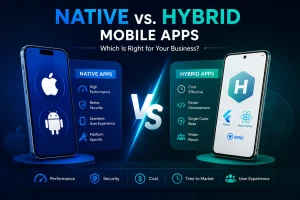
Every founder, product manager, and business owner building a mobile app asks the same question and doesn’t always get a straight answer. How much does mobile app development cost, really?
The honest answer is that mobile app development company costs vary more than almost any other technology investment a business makes. A basic informational app can cost $10,000. A fully featured enterprise platform can cost more than $500,000. And the gap between those two numbers is determined by factors that are entirely within your control.
This guide breaks down the real numbers, the variables that move them, and how businesses in India can make informed budgeting decisions.
Why Mobile App Development Cost is Never a Single Number
The mobile app marketing is projected to reach $638 billion by 2027. With that scale of economic activity comes enormous variation in what app costs to build and maintain. Understanding that variation starts with understanding the core factors that drive it.
A mobile app is not a commodity product. It is a custom-built part of software whose cost is determined by:
- What it needs to do
- Who builds it
- Where they are located
- Which platform it targets
and how complex the architecture is
Treating mobile app development cost as a single figure is like asking how much a building costs without requirements.
What Does Mobile App Development Actually Cost in 2026?
By App Complexity
The most direct cost driver is the complexity of what you are building.
| App Complexity | Features Included | Estimated Cost (India) | Estimated Cost (US/UK) | Ideal For |
| Simple App | Basic UI, login, limited features | $10,000 – $50,000 | $30,000 – $100,000 | MVPs, startups |
| Mid-Complexity App | APIs, payment gateway, dashboards | $50,000 – $150,000 | $100,000 – $250,000 | SMBs |
| Complex Enterprise App | AI, analytics, multi-role systems | $150,000 – $500,000+ | $250,000 – $1M+ | Enterprises |
Simple apps
Basic features, limited integrations, straightforward user flows, single platform
Typically, they fall in the range of $10,000 to $50,000.
Examples include informational apps, single-feature utility apps, and MVPs designed to test a concept before full investment.
Mid-complexity apps
Multiple features, third-party integrations, user accounts, and backend data management
typically range from $50,000 to $150,000.
Most commercial apps for small and medium businesses fall in this tier.
High-complexity apps
Advanced features like AI/ML integration, real-time data processing, complex multi-role user systems, and multiple platform support
Typically, they range from $150,000 to $500,000 and above.
Enterprise platforms, social networks, and sophisticated eCommerce systems commonly fall into this category.
Platform
Platform choice has a direct impact on the cost of mobile app development.
| Platform | Average Development Cost | Development Time | Maintenance Cost | Best For |
| Android | $20,000 – $100,000+ | Medium-High | Higher testing cost | Large user reach |
| iOS | $15,000 – $200,000+ | Medium | Moderate | Premium audience |
| Cross-Platform | $25,000 – $120,000 | Faster | Lower | Cost-efficient businesses |
Android app development
It typically requires more investment upfront because of the fragmentation of the Android ecosystem. Even multiple devices, OS versions, varying screen sizes, and hardware capabilities all require more extensive testing. A simple Android app development typically costs $20,000–$50,000. A complex one can exceed $100,000.
iOS app development
It benefits from Apple’s controlled hardware environment. That means fewer device models, more uniform OS adoption, and tighter quality standards. This reduces testing overhead and often results in slightly lower development costs for equivalent functionality. Simple iOS app development range from $15,000–$45,000. Complex builds reach $200,000+.
Cross-platform development
It uses Flutter or React Native, shares a single codebase across both platforms, reducing development and maintenance costs by 25–40%. For most business apps, cross-platform is the most commercially sound choice. And offers lower cost, faster delivery, consistent behaviour across Android and iOS, and a single codebase to maintain.
The Factors That Move Mobile App Development Cost Up or Down
Here are the crucial factors that impact the mobile app development cost directly.
Feature Complexity
Every feature added to an app adds development time, testing time, and ongoing maintenance cost. The principle is simple but often underestimated in planning. It consists of a user profile, a push notification system, an in-app payment flow, a real-time chat function, and a recommendation engine. The most practical approach for controlling cost is to prioritise ruthlessly at the outset.
Build the minimum viable product that tests your core hypothesis. Add features based on real user feedback, not assumptions. This approach, building MVP first, typically saves 30–50% on initial development costs and produces a product that has been validated by users before significant additional investment is made.
App Design
Mobile app UI/UX design is where many projects either control costs sensibly or let them escalate unnecessarily. Custom design costs significantly more than adapting well-established design templates.
The right choice depends on your product’s competitive positioning. For most business apps, clean and functional design using established patterns serves users well at a fraction of the cost of fully custom design work. Custom design makes sense when visual differentiation is genuinely central to the product’s value proposition.
App design typically accounts for $15–$250 per hour, depending on the designer’s experience and location. And design work for a standard app can represent 20–30% of the total project budget.
Team Location
Where your development team is based has a profound impact on the cost of mobile app development in India vs the US, UK, or other markets. The differences are substantial.
| Region | Average Hourly Rate | Cost Efficiency | Communication & Expertise |
| India | $20 – $80/hr | Very High | Strong technical talent |
| Eastern Europe | $30 – $70/hr | High | Strong engineering expertise |
| Latin America | $35 – $80/hr | Moderate | Time-zone advantage |
| UK | $80 – $180/hr | Lower | Premium pricing |
| USA | $100 – $250/hr | Lower | Enterprise specialization |
| Australia | $90 – $125/hr | Moderate | Regional projects |
The cost of mobile app development in India consistently offers the most commercially attractive combination of technical capability and price. Indian mobile app development companies serve clients across 30+ countries, have deep experience with Android app development and cross-platform frameworks, and operate at rates that are 60–70% lower than equivalent US-based teams without compromising on delivery quality.
For businesses evaluating the cost of mobile app development, engaging an experienced mobile app development company in India for a project that would cost $150,000 in the United States often produces comparable quality output at $50,000–$70,000.
Maintenance and Post-Launch Costs
Mobile app development cost does not end at launch. Annual maintenance & support services covering OS updates, security patches, bug fixes, performance optimisation, and feature iterations. It typically runs 15–20% of the original development cost per year.
For a $60,000 app, that is $9,000–$12,000 annually. For a $200,000 app, it is $30,000–$40,000. These costs need to be factored into the total investment from the beginning, not discovered after launch when the budget has already been spent.
Real-World Cost Examples: What Popular App Categories Cost to Build
Understanding how much mobile app development costs applies to specific categories helps ground abstract cost discussions in practical reality.
| App Category | Estimated Cost Range | Key Features |
| eCommerce App | $40,000 – $250,000+ | Payments, catalogues, inventory |
| Food Delivery App | $60,000 – $200,000+ | Tracking, delivery management |
| Healthcare App | $50,000 – $250,000 | Compliance, records, appointments |
| On-Demand Service App | $50,000 – $300,000 | Booking, payments, GPS |
| Social Media App | $30,000 – $300,000+ | Messaging, media sharing |
eCommerce apps — covering product catalogue, checkout, payment integration, order management, and user accounts. It typically ranges from $40,000 for a basic single-vendor store to $250,000+ for a multi-vendor marketplace with AI-powered recommendations.
Food delivery apps — real-time tracking, restaurant integration, route optimisation, payment processing. It ranges from $60,000 for a single-restaurant app to $200,000+ for a full aggregator platform.
Healthcare apps — appointment booking, patient records, compliance requirements, wearable integration. It typically ranges from $50,000 for basic health tracking to $250,000 for full clinical platforms.
On-demand service apps — booking flows, location services, payment integration, service provider management. It ranges from $50,000 to $300,000 depending on service complexity.
Social or dating apps — user matching, messaging, media handling, moderation. It ranges from $30,000 for a basic MVP to $300,000+ for a fully featured platform.
For context, some of the most recognisable apps in the world cost more than most businesses assume. Instagram’s initial development budget was estimated at $400,000–$500,000. Uber’s early prototype cost approximately $30,000–$100,000. Snapchat’s initial build was in the $45,000–$200,000 range. They are reference points for understanding the scale that significant mobile products require.
Mobile App Development Cost in India: The Specific Advantage
For any business asking how much the cost of mobile app development differs when building with an Indian team. The answer is consistently in the range of 60–70% lower than equivalent US or UK development costs.
The important qualification is that these savings materialise only when the development partner is genuinely capable. Especially with proven delivery history, strong communication, and a development process that produces well-documented code rather than fast output.
When evaluating mobile app development companies in India, the questions that matter most are what apps they have shipped in production at scale. The hourly rate is the least important variable in predicting project outcomes.
Practical Ways to Reduce Mobile App Development Cost Without Reducing Quality
Here is how you can pay attention to reduce mobile app development costs.
Build an MVP First
Launching with core features only, the minimum product that tests your central hypothesis. It reduces initial development cost by 30–50% and produces a product that has been validated before you invest in the full build.
Choose Cross-Platform Development
For most business applications, Flutter or React Native delivers native-like performance on both OSs. The development cost is 25–40% lower than building two separate native apps, and maintenance is significantly simpler.
Use Third-Party APIs and Services
Payment processing, mapping, authentication, push notifications, analytics. All of these are available as mature third-party services that integrate in days. Using them reduces cost and improves reliability, since you are building on tested infrastructure rather than recreating it.
Design for Scalability From the Start
An app built without scalability in mind will require partial or complete rearchitecting when it grows. Building the right architecture at the beginning costs more than cutting corners. But significantly less than rebuilding later. Discuss scalability requirements explicitly with your development team before work begins.
Partner With an Experienced Team
The most expensive mobile app marketing mistake is choosing a cheap team that produces work requiring expensive rework. Senior developers cost more per hour. They typically produce cleaner code, make better architectural decisions, require less management oversight, and deliver in fewer total hours. The total project cost is often lower, not higher.
Conclusion:
Mobile app development cost is ultimately a function of what you need the app to do and how clearly you define requirements. The businesses that get the best value from mobile development investments are those that define scope rigorously. You can choose experienced partners rather than cheap ones and account for ongoing maintenance from the outset.
The technology to build a genuinely capable mobile product, whether iOS, Android, or cross-platform, has never been more accessible.
FAQs
How much does custom mobile app development cost for startups and enterprises?
The cost of mobile app development depends on multiple factors such as app complexity, features, platform selection, UI/UX requirements, third-party integrations, and development timelines. Startup MVPs generally require lower investment, while enterprise-grade applications with AI, cloud integration, and advanced security involve higher development costs.
What factors affect the overall mobile app development cost?
Several factors influence app development pricing, including the number of features, design complexity, backend infrastructure, development framework, API integrations, testing requirements, and post-launch maintenance. Choosing between native and cross-platform development also significantly impacts the final budget.
Is cross-platform app development more cost-effective than native app development?
Yes, cross-platform development frameworks like Flutter and React Native can reduce development costs by allowing businesses to use a single codebase for both Android and iOS platforms. This lowers development time, maintenance efforts, and long-term operational expenses.
How can businesses reduce mobile app development costs without compromising quality?
Businesses can optimize development costs by starting with an MVP, prioritizing essential features, selecting scalable frameworks, using agile development methodologies, and partnering with experienced mobile app development companies that offer transparent pricing and efficient project management.
Why should businesses invest in scalable mobile app development despite higher initial costs?
Scalable mobile applications help businesses support future growth, handle increasing user traffic, integrate advanced technologies, and avoid expensive redevelopment later. Investing in a future-ready architecture improves long-term ROI, operational efficiency, and customer experience.